The World of Floral Painting: Where Nature, Emotion, and Space Meet
The depiction of flowers is one of the oldest and most deeply rooted themes in visual art. At first glance, it may seem decorative, light, or romantic, yet in reality it is an exceptionally complex and sensitive field. A floral painting does not merely represent a plant. It carries mood, time, fragility, life cycles, and often deeply personal emotions. As an artist, floral painting is not about botanical accuracy for me, but about the feeling evoked by the delicate forms of nature. A flower simultaneously embodies beauty and transience, energy and stillness. This duality is what gives the genre its true depth.
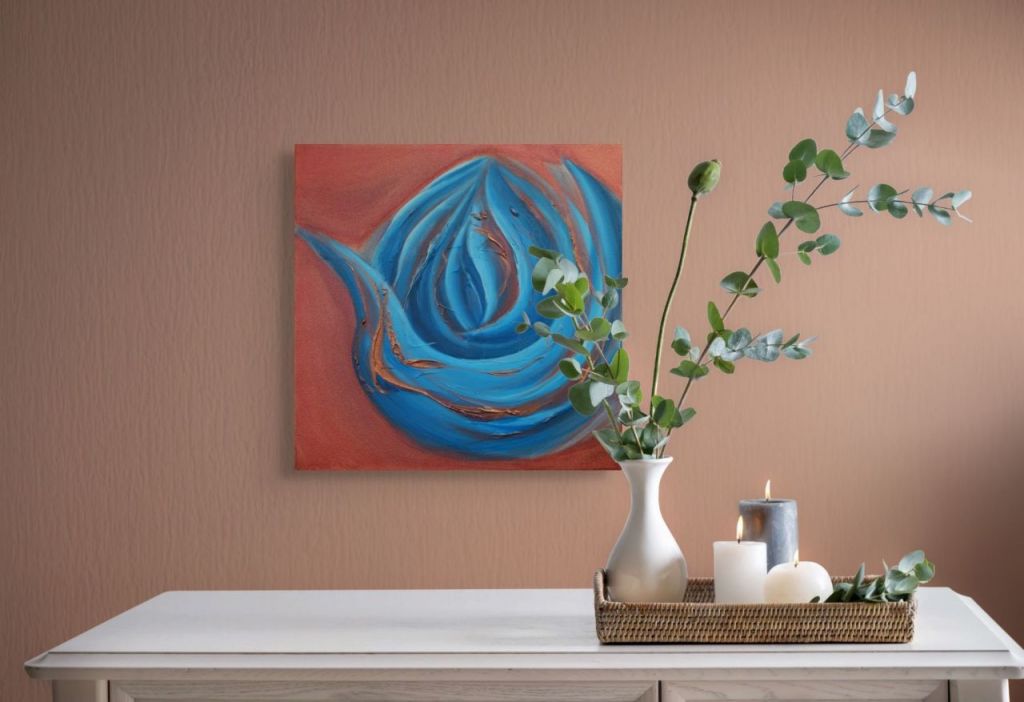
The Flower as an Eternal Motif in Art
The depiction of flowers appears in nearly every era of art history. Even ancient civilizations used plant motifs for religious, symbolic, and decorative purposes. In ancient Egypt, for example, the lotus symbolized rebirth and creation, and frequently appeared in murals and decorative objects. In medieval manuscripts, flowers often carried theological meanings, while during the Renaissance, scientific curiosity led to detailed and precise observation of plants. In the Dutch Golden Age, floral still lifes became an independent genre rich in symbolic content. Flowers were never merely decorative — they conveyed meanings, social values, emotional states, and philosophical ideas.
The Perspective of Contemporary Floral Painting
In modern art, the floral motif appears with much greater freedom. The goal is not necessarily to faithfully replicate reality, but to express form, color, and sensation. A flower can be abstract, enlarged, almost unrecognizable, or minimalist. For me, a flower is not an object, but energy. In a painting, the movement of petals, the tension of colors, or the texture of the surface can matter more than identifying the exact species. The aim is to create atmosphere, not provide information. This perspective fits particularly well into modern interiors, where minimizing visual noise and making conscious aesthetic choices are essential.
Why Do People Choose Floral Paintings for Their Homes?
Floral painting has an unique ability to make a space feel instantly human and relatable. While abstract painting often evokes intellectual or emotional reactions, floral motifs are intuitively familiar. They connect to nature, the changing seasons, personal memories, and those quiet moments that often pass unnoticed in everyday life. The sight of a flower can evoke the scent of a garden, the light of a summer afternoon, or the atmosphere of a meaningful occasion.
The emotional impact of flowers is deeply rooted in human culture. Their colors and forms can evoke calm, joy, nostalgia, or even a gentle melancholy. Soft, muted tones soothe, rich saturated hues energize, and contrasting compositions bring vitality to a space. Unlike a bouquet, this effect in painting is lasting. A floral artwork is not just decoration — it is an element that shapes atmosphere. It softens hard lines, brings life to surfaces, and creates a natural balance between built environments and organic forms. It is as if a quiet imprint of nature moves into the room — not intrusively, but harmoniously and almost imperceptibly. This effect is particularly pronounced in modern interiors. Minimalist spaces are often deliberately devoid of unnecessary details, so a floral painting can add warmth and personality without breaking the clean overall picture. It does not dominate the space, but makes it more human, bringing the rhythm of nature closer to everyday life.
The presence of a floral painting also has a long-term effect. It does not end with the first impression, but develops with the changing light, the seasons and the mood of the people living there. It may seem fresh and lively in the morning, but in the evening it shows its quieter, more intimate face. This subtle variability makes it alive, and therefore becomes an integral part of the space.
Which Spaces Are Best for Floral Paintings?
Floral paintings are highly versatile, yet they take on different roles in different spaces. In a living room, a large, expressive floral composition can serve as an elegant focal point. It is not necessarily romantic or classical, but rather sophisticated and natural. In the bedroom, soft-toned, harmonious works support rest and relaxation. Organic forms gently dissolve the rigidity of the space. In the dining area, floral paintings convey warmth and hospitality. It is no coincidence that floral still lifes historically appeared in dining environments. In offices and representative spaces, floral artworks humanize the environment without becoming overly personal. They convey subtle elegance while creating an inspiring atmosphere.
The Role of Size and Proportion
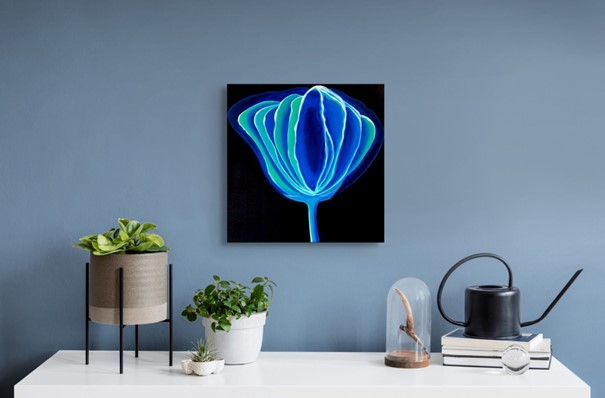
One of the most important aspects when choosing a floral painting is size. Apiece that is too small can easily disappear on a wall, especially in bright, open spaces, while one that is too large may become overwhelming and disrupt the balance of the room. The ideal proportion depends on the size of the room, wall dimensions, furniture placement, and lighting conditions. It is not only about the size of the artwork, but also about the space around it — whether it has room to “breathe.” Large-scale floral paintings can be particularly powerful because the forms almost envelop the viewer, and the details are evident both up close and from a distance. In such cases, the image is not only visible, but also experienced: the curve of the petals, the depth of the colors and the texture of the surfaces create a kind of visual spatial experience. Such a work easily becomes the centerpiece of the room, defining the character of the space. In a smaller scale, the floral composition becomes a more subtle, intimate presence. It does not dominate, but rather draws the eye closer and enriches the environment as a quiet detail. These images often work well in places where the viewer encounters them up close: in a reading corner, bedroom, hallway or on small wall sections. In such cases, the painting provides a personal experience rather than a representational effect.
Size is therefore not a mere aesthetic issue, but determines the quality of the relationship with the space. A well-proportioned floral painting can be present in a way that is both emphatic and harmonious, and provides a balanced view in the long term.
Color and Atmosphere
Color is one of the most essential elements of floral painting. The natural palette of flowers is incredibly rich, and every shade evokes a different emotional response. No color exists in isolation on the canvas — the interaction of tones, the balance between light and dark, and the subtlety of transitions together shape the mood of the painting. Light, pastel tones convey calm and clarity, creating an airy and gentle atmosphere. These soft shades create a delicate, airy atmosphere that is particularly well suited to spaces used for relaxation. Deeper, more saturated colors, on the other hand, convey elegance, weight, and inner strength. A richly toned floral painting gives a strong presence to a wall, while bringing warmth and character to the environment. Contrasting compositions bring dynamism to a space. When light and dark surfaces, vibrant and subdued colors meet, the painting becomes lively and constantly maintains attention. This type of visual energy works especially well in rooms where the space needs momentum, focus, or freshness.
As an artist, I always strive for colors to be beautiful not only on their own, but also to create unity with the environment. A painting truly becomes part of a space when it reflects the shades of the surrounding surfaces: the tone of the wall, the color of the textiles, the warmth of the wood, or even the reflections of the lights. In this case, the picture does not appear as a foreign body, but becomes a natural continuation of the interior. Colors have a changing relationship with the space over time. Different light conditions at different times of the day show different faces of the same painting. In the morning it can be fresh and lively, in the afternoon it becomes warmer in tone, and in the evening it radiates a more intimate, deeper atmosphere. This continuous, subtle transformation makes the work alive, and therefore becomes exciting in the long term.
Well-chosen color harmony is therefore not only an aesthetic issue, but also determines the emotional quality of the space. A floral painting can create tranquility, inspire or even dissolve the constraints of the space — depending on what colors and proportions meet in it.
What to Consider When Purchasing
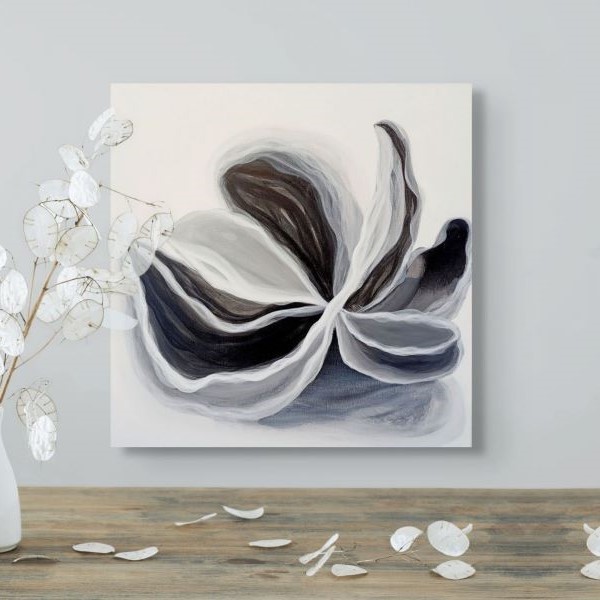
Choosing a floral painting is not just an aesthetic decision. It is important to create a real connection between the work and the viewer. It is worth observing how much it attracts the eye, how long it remains interesting, what emotional reaction it evokes. A good painting is not limited to the first impression. Technical quality is also key. Durable materials, careful workmanship and the quality of the surface determine the value of the work in the long term. Lighting is also important. Floral paintings are particularly sensitive to light, because the intensity of the colors and the texture of the surfaces change depending on it.
Floral Painting as a Personal Choice
Ultimately, floral painting is special because it is both universal and deeply personal. It speaks to everyone, yet everyone sees something different in it. A floral artwork can be a memory, a mood, a desire, or simply a source of aesthetic pleasure. It does not necessarily need to be interpreted — it is enough to live with it.
Closing Thought
When choosing a floral painting, we are inviting a fragment of nature into our space — not literally, but as a sensation. A presence that changes with light, seasons, and our own mood. For me as an artist, the essence of floral painting lies in reminding us of the fragility of beauty and the continuous renewal of life. A well-chosen piece does not merely decorate a wall — it quietly accompanies everyday life.
If You Would Like to Bring the Subtle Presence of Nature into Your Home
Among my floral paintings, you can find unique, ready-to-ship works that are already prepared to continue their story in a new space. If you are looking for a piece that perfectly matches your interior, dimensions, or color palette, I also gladly create custom paintings based on individual requests. I believe the most beautiful works are born when the artwork and the space truly meet. If you would like to find the floral painting that genuinely resonates with you, or if you are considering a custom piece, feel free to explore my current collection or get in touch.